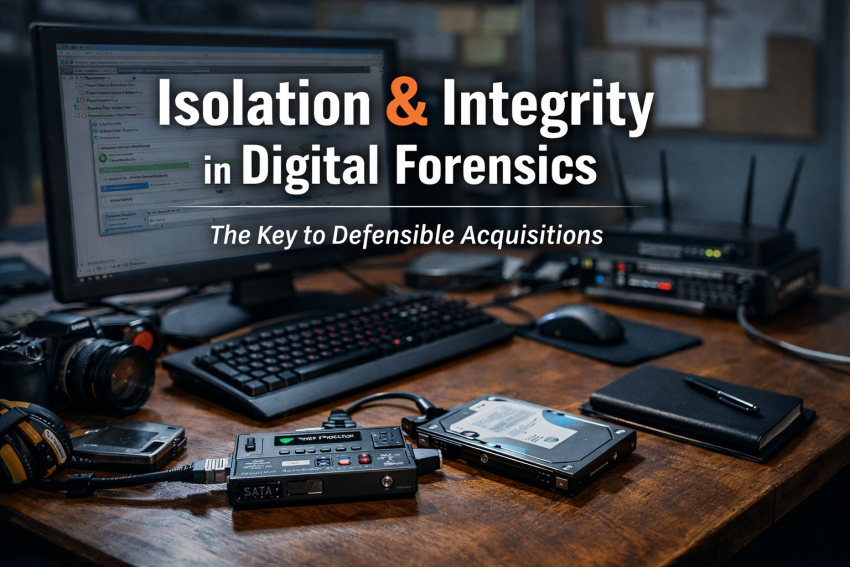
As I continue learning about disk imaging, I've seen the instruction: isolate the forensic workstation from networks.

At first, I thought that meant disconnecting everything involved. The suspect machine. The workstation. Pull every cable. Air-gap the world.

But here’s what I’ve learned.

The instruction is specifically about protecting the acquisition environment. The forensic workstation is where the image is being created and stored. If that system is exposed to the internet or an uncontrolled network, you introduce risk, malware, remote access, background updates, or other processes that could interfere with the acquisition.

Even if a hardware write blocker is in play, it only protects the evidence drive from being modified. It does not protect the workstation itself. And if the workstation is compromised, your entire process becomes harder to defend.

For local acquisition in a lab setting, the cleanest approach is simple:
 Disconnect the forensic workstation from external networks during imaging. Keep the environment controlled. Verify your tools. Hash the image. Document everything.

But here’s where it gets more interesting.

In real-world scenarios, especially in enterprise environments, acquisition isn’t always local. Sometimes you’re performing remote acquisition across a secured network. In that case, complete isolation isn’t possible. Instead, the focus shifts from physical disconnection to controlled access.

Restricted VLANs. Encrypted communication. Logged activity. Limited outbound traffic.

The principle doesn’t change. The controls adapt.

What this really taught me is that digital forensics isn’t about memorizing rigid rules. It’s about understanding risk and preserving integrity. Every decision during acquisition must answer one question:

Can I defend this process if challenged?

That mindset changes everything.

As I continue building my foundation in digital forensics, especially through hands-on work with imaging tools and analysis platforms, I’m learning that precision in both execution and documentation is what separates practice from professionalism.

Isolation protects integrity.
Documentation protects credibility.
Understanding why you’re doing both is what makes you an examiner.
 English